


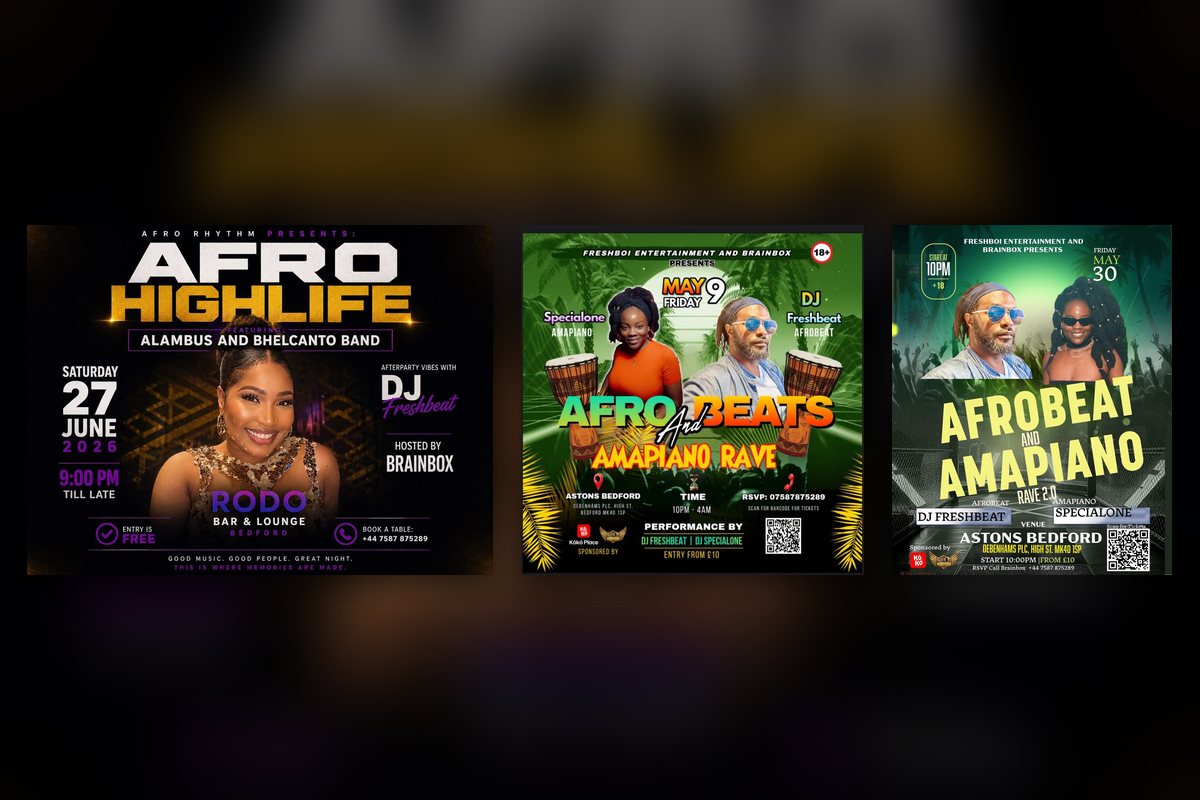
Look through our line-ups and you’ll see the same handful of words: Afrobeats, Amapiano, Dancehall, Highlife, Hip-Hop. Here is a quick guide to what each one means and where it comes from.
Afrobeats and Afrobeat
They sound alike but are different things. Afrobeat (no “s”) is the 1970s sound pioneered by Fela Kuti, mixing West African rhythms with jazz and funk. Afrobeats (with an “s”) is today’s pop sound from Nigeria and Ghana, drawing on highlife, hip-hop, dancehall and R&B. Our posters use both spellings, and most nights lean on the second.
Amapiano
Amapiano is a South African dance sound that grew out of house music. It is known for its deep, bouncing log-drum bass and its piano melodies, and it has spread far beyond South Africa to dance floors across the UK. Our Afrobeat and Amapiano raves were built around it.
Dancehall and Bashment
Dancehall began in Jamaica in the late 1970s and is built on sparse, heavy riddims. In the UK, “bashment” is the common word for the same party music, and you will see both on our flyers.
Highlife
Highlife is one of the oldest popular music styles in West Africa, with roots in Ghana and Nigeria. It is guitar-led and melodic, and it is the foundation for a lot of modern Afrobeats. It was the theme of our Afro Highlife night.
Hip-Hop and Trap
Hip-Hop and its harder-edged cousin, Trap, bring the hard-hitting drums. Artists like Chaws Beau blend them with Afrobeat rhythm to make something new.
Hear it live
The best way to understand a sound is to hear it in a room. See what’s coming up on our events page, or look back at previous nights.